“It is good to confide in the Lord, rather than to have confidence in man.”
-Psalm 117:8
It is indeed better to have confidence in God rather than man, including, and especially ones masquerading as Catholic bishops, nowadays.
Some of the more wacky among them, even insist on inventing brand new Rosary schemes. Today’s treacherous pseudo-clergy can’t help but invent new ways to outdo the Blessed Mother, who they neither love nor revere. Of course, failing to love Mary will carry certain consequences.
So, to counter their irreverence, and warn them of the ramifications they face, I assembled a new “Rosary” . . . just for them (educational purposes only).
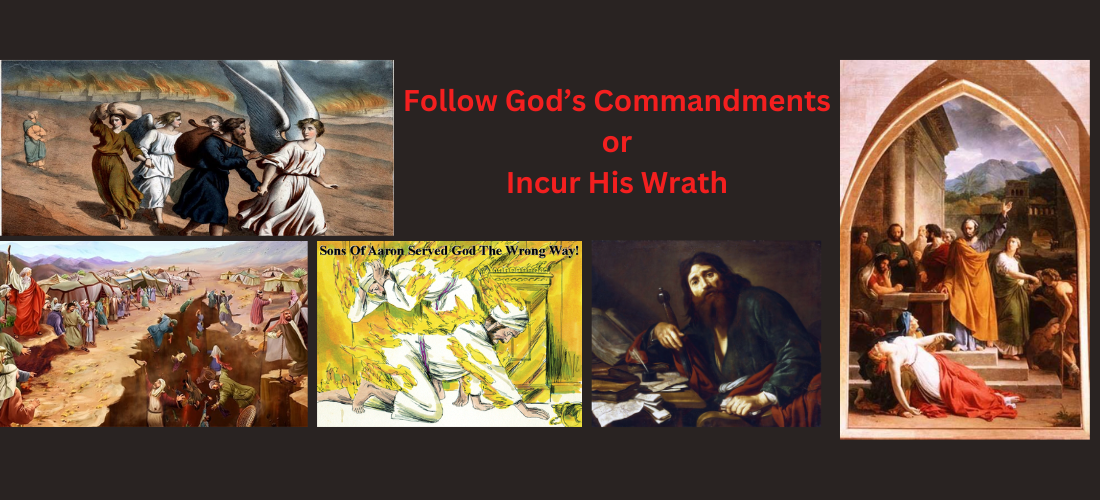
Behold the Five Punishment Mysteries . . . tailored for the Bergoglian Antichurch’s apostate “bishops.” For if they do not cease to terrorize and molest Holy Mother Church, they, too, can expect punishments similar to the following.
Punishment Mysteries of the Rosary
First Punishment Mystery: Sodom & Gomorrah
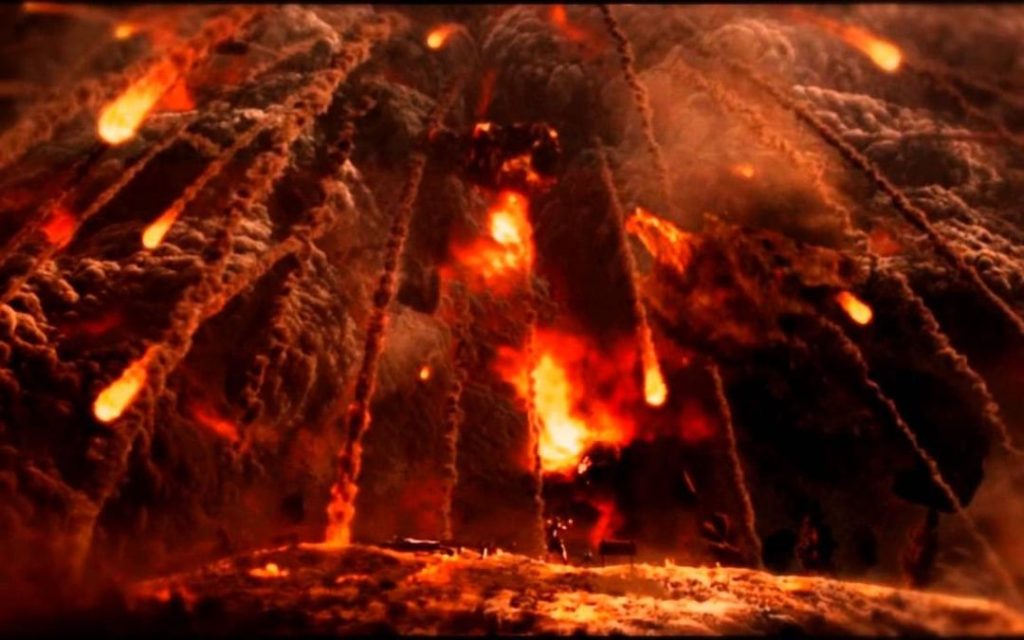
This is an obvious lead-off choice for these mysteries, seeing as it was one of God’s earliest chastisements. I would have included the Deluge, too, but Bishop Wack already selected it as his 3rd Hopeful Mystery. I wanted to make something new, considering how important “new” is to modernists.
What better way to start this “Rosary” arrangement than by reflecting on the massive fire brought down on the sexual deviants of those two woe-begotten biblical cities? It’s important, however, for us to avoid the mistake of thinking Sodom & Gomorrah only received their punishment because of inhospitality (as many “New Theologians” contend). Think about it, my friends. Would it make any sense for Jesus to STOP his disciples from bringing down fire on inhospitable Samaritans if he had applied that punishment previously to Sodom & Gomorrah?
Wouldn’t that be hypocritical? Is God capable of that? Such a stupid explanation leads one to assume God is inconsistent and waffles on justice and morality. Yes, I know that’s what modernists wish for us to believe, but I’m here to prevent that.
Second Punishment Mystery: Deaths of Nadab & Abiu (Aaron’s Sons)
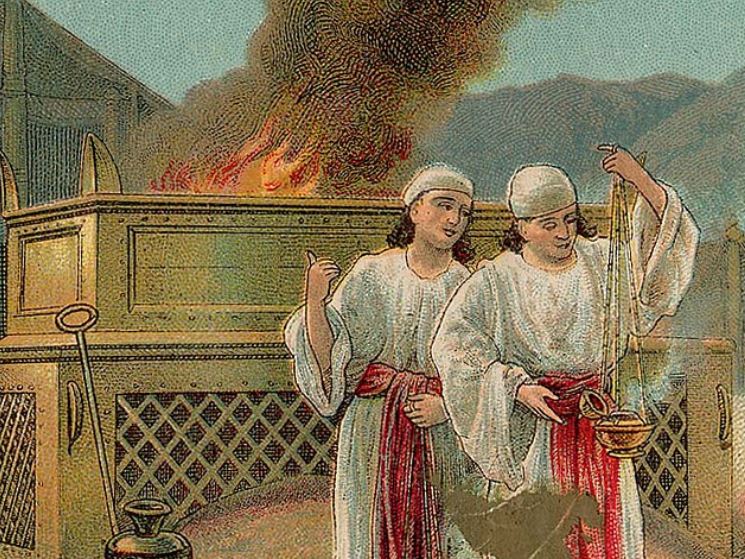
Next, it is most fruitful for bishops and priests to meditate on that fateful day when Aaron’s sons, Nadab & Abiu, were incinerated for bringing strange fire before God. This is a clear Old Testament precursor to the problem we have with introducing new liturgies coinciding with an incredible multitude of sacrileges against the Holy Eucharist in our times.
Recall, for example, all the lay people who casually open and close the tabernacle, manipulating its Holy Contents, in typical Novus Ordo parishes. Granted, there is another angle to this as well. While Nadab & Abiu were permitted to approach the Holy of Holies, as priests, like their father, it was their wicked and innovative methods, which incurred God’s wrath.
Just as it is forbidden for prelates to introduce novelties into the Church (hint: Hopeful Mysteries), the sons of Aaron discovered the fury of God’s justice after offering something impermissible. They failed to follow instructions, decided to do their own thing, and suffered the consequences. Deus Vult!
Today, we encounter this problem, only so much worse, whenever Antichurch bishops (like Leo Suenens) go out of their way to get lay people to handle the Eucharist. God forbids this as well, yet clerics all over the world encourage the offensive practice, anyway. Considering this brazen offense, one might wonder if another type of fire awaits those bishops who are most responsible for spreading Communion-in-the-hand and other Eucharistic abuses.
- Bonus: If any prelates have extra free time, try having a chat with this Indian fellow, found reenacting the strange fire episode at a Novus Ordo Mass recently. He may require discipline.
Third Punishment Mystery: Korah & Companions Swallowed Into Hell
Irrespective of the opinions of the “smart bishop,” Robert Barron, Holy Scripture is quite clear that Hell has many unhappy denizens. Korah’s fate will be the same for all those Vatican II modernists who question the authority of the Church (especially Vatican I) and the papacy.
Of course, we should remember that if we follow the false Anti-Catholic shepherds, who have seized control of Church structures, we shall share their terrible punishment. Therefore, let us Traditional Catholics do like the Israelites after witnessing Korah’s demise, and flee from them . . . lest perhaps the world swallow us up also.
Fourth Punishment Mystery: The Chastisement of the Corinthians
Here we have a mystery that involves clergy and lay people alike, as St. Paul chastises the Corinthian Church at-large.
Granted, you might say “hey, St. Paul didn’t inflict any punishment onto the Corinthians.” Ah, but upon closer inspection, he imparted a very serious punishment, which appears later in his epistle. In Chapter 16 of 1st Corinthians, he issued the first ever anathematization. That’s a fancy way of saying he “cursed” those Corinthians who would not follow God’s law, choosing instead to participate in horrible vices: adultery, drunkenness, extortion, and so forth.
St. Paul rebuked their sins in Chapter 6, then issued a corresponding anathema in Chapter 16. While it is true that cursing someone is not necessarily an aggression (if intended mercifully), it is a form of punishment for willfully disobeying God’s laws. How many modern Catholics ignore this, and, with their spiritual father, Martin Luther, prefer to “sin boldly,” earning eternal damnation for their efforts?
Fifth Punishment Mystery: Pope St. Peter’s Justice
This is a delightful reflection for anyone who labors under the foolish Bergoglian belief that “the death penalty is evil.”
If Bergoglio was the pope (he is not), he would have known about the heroic exploits of his very first predecessor, St. Peter. It was none other than the First Roman Pontiff, guided by the Holy Ghost, who brought about the death of Simon the Magician AND the wicked couple, Ananias and Saphira. Both episodes occurred justly, per the will of God.
The former, Simon the Magician, not only sold the holy sacraments, but even considered himself TO BE CHRIST, whilst using parlor tricks to fake his “death and resurrection.” Then, he attempted an “ascension” to impress the treacherous Emperor Nero. By God’s grace, with St. Paul’s prayerful support, St. Peter commanded the demons (who were responsible for “ascending” the rotten bastard, Simon) to drop him to his death.
Forced to obey the Holy Pontiff, empowered by God, Simon’s “angels” released him immediately, causing his fatal collision onto the surface, shattering him into four pieces. It was a rather momentous occasion, which Catholics should read about when the opportunity permits.
Nonetheless, let this be a warning to those prelates, hijackers of Holy Orders, who have laid hands on so many sodomites and devils, while transforming themselves into millionaires. You won’t get away with this for much longer (neither here, nor in eternity).
- Bonus: St. Peter also told Nero that Simon the Magician went to Hell (so, once again, we know there are people there).
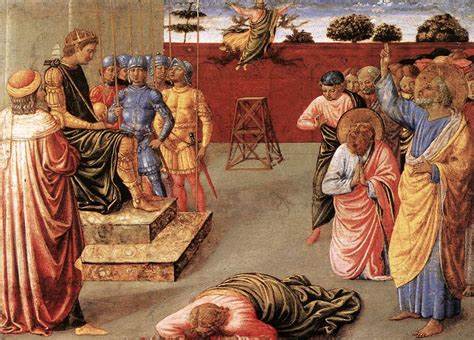
It’s amazing how applicable these scriptural events are for our times. Thanks be to God.
Conclusion: Pray Real Rosary Mysteries & Stop Playing Cutesie Games
Now, it should be clear how silly it is to extract episodes from the bible to assemble a makeshift Rosary. Therefore, let us halt all this nonsense with new mysteries. Instead of trying to feel important by re-inventing or manipulating devotions, let us exhibit true holy obedience toward the Blessed Mother, and pray the 15 decades she gave us:
- Joyous
- Sorrowful
- Glorious
You can even pray . . . all of them . . . every day!
Notice, by the way, we already possess hopeful mysteries (as all of them are). Even the Sorrowful Mysteries offer inspiration for the suffering and doubtful. A serious meditation on Our Lord’s Passion, arguably the most important prayerful activity, does more to generate hope, contrition, and awe and reverence for God, than all other devotions.
How many of today’s prelates meditate on the Passion of Jesus Christ every day?
At any rate, we have little need for new concocted devotions. None of these other novel practices are wholesome for Catholics, either.
- Hopeful Mysteries
- Luminous Mysteries
- Divine Faustina Mercy
- Divine Picaretta Will
- Charismatic Renewal
- . . . and almost anything else invented in just the 20th or 21st centuries.
If you have further questions on this topic, please email me or comment below. I will respond as expeditiously as possible.

 Catholics Aren't Zombies!