
“The Spectacle wants your attention. The enemy wants your soul. The saints want you awake. The veil is lifting. The witnesses are speaking. The only remaining question is whether we will listen.”
– Prologue to Saints of the Apocalypse: Escaping the Empire of Spectacle
Are you sick to death of being fooled by psy-ops with no effective way to comprehend and avert them? All discerning Catholics should desire to demystify the insanity of the world. Thankfully, we now possess a clearer framework for understanding and escaping the spiritual, psychological, social, and political menace surrounding us.
Dr. Douglas Haugen’s new book, Saints of the Apocalypse: Escaping the Empire of Spectacle offers an outstanding scholarly supplement to what you should already know about the Catholic religion. In it, the man known as Dr. Deep State delivers a clear, concise, and cogent explanation of what he terms the Empire of Spectacle torturing us more ferociously (if we permit it). I’d like to review what I enjoyed most from his well-researched contribution, but first let us ask ourselves some pertinent questions about our approach to the Catholic faith.
How seriously do each of us take the eminent spiritual warfare between the Seed of the Woman and the Seed of the Serpent?
Next, what is it that’s so wrong with the world and the Church nowadays?
Should we just brush it off and pretend “it’ll get better,” or take action to safeguard against the ubiquitous sources of scandal?
Are we being lured into a massive trap of some sort?
Those are the primary spiritual dilemmas Dr. Deep State explores throughout Saints of the Apocalypse. If that ancient enmity (woman vs. serpent) is your most paramount concern, your raison d’être as a member of the Church Militant, then you’ll enjoy tremendous encouragement from Dr. Haugen’s book. I can vouch for that myself, considering how much his narrative ties into the primary themes on my blogging website.
Indeed, Catholics aren’t zombies, because the latter represent a tremendous ontological contradiction: to be alive, but not alive. The concept of a zombie, whenever we behave like one, violates and offends the very essence of our humanity. Serious Catholics cannot allow themselves to lapse into this category by succumbing to the Empire of Spectacle, the most dangerous allurement, which leads souls into damnation.
In this book review, I won’t spoil every detail, but I’d like to share my thoughts on Dr. Haugen’s penetrating analysis of the vast worldly spectacles along with prescient insights from the 10 saints he emphasized in his work. Following that, I include a glossary of sophisticated terms and concepts Dr. Deep State uses most often.
Review Contents:
- The Proto-Martyr, St. Stephen
- Ascetic Saints – St. Anthony & St. Vincent Ferrer
- The Great Thinkers – St. Augustine & St. Thomas Aquinas
- The Fighters – St. John Chrysostom, St. Athanasius, St. Agobard, & St. Maximilian Kolbe
- Our Lady of Fatima
- Conclusion
- Appendix: Glossary of Dr. Deep State Terms
Saints of The Apocalypse
For the sake of this review article, I’ve arranged the saints into a few categories, corresponding to how I interpreted their contributions to this prolific and perennial fight against the Spectacle. This is not how Dr. Deep State organizes his book (which you should read in order without skipping chapters).
Let us begin with that holy figure who first witnessed the beatific vision after decrying the Spectacle in his midst.
The Proto-Martyr, St. Stephen
“When St. Stephen was stoned, the crowd–not the Roman state–became the direct instrument of his death.”
Dr. Haugen begins his exploration of the saints with the proto-martyrdom of St. Stephen, the first witness to offer his life for the sake of Jesus Christ, the eternal logos. The above quotation should really hit home for us as foundational for everything faithful Christians would endure throughout the ages.
Just like it was for Our Lord’s Holy Sacrifice at Calvary, St. Stephen died amidst chanting, jeering, cheering, and plenty of fanfare, not from the Roman military, but from those holdover Jews (including the pre-converted St. Paul) who rejected Truth Incarnate.
Because this involved the Jews (Pharisees, Sadducees, etc.), whose ancestors God led out of Egypt, one cannot help but notice such a profound lack of gratitude. Either by ignorance or malice, this blindness propels a war against God, and, according to Dr. Haugen, St. Stephen’s proclamation reveals the deep enmity between the Seed of the Woman and the Seed of the serpent.
Before receiving the Beatific Vision right before them, he castigated them for their treachery and spiritual myopathy:
“You stiffnecked and uncircumcised in heart and ears, you always resist the Holy Ghost: as your fathers did, so do you also. Which of the prophets have not your fathers persecuted? And they have slain them who foretold of the coming of the Just One; of whom you have been now the betrayers and murderers: Who have received the law by the disposition of angels, and have not kept it. Now hearing these things, they were cut to the heart, and they gnashed with their teeth at him. But he, being full of the Holy Ghost, looking up steadfastly to heaven, saw the glory of God, and Jesus standing on the right hand of God. And he said: Behold, I see the heavens opened, and the Son of man standing on the right hand of God.” – Acts 7 51:55
Perhaps some of us will receive the same fate as St. Stephen once Noahide laws go into effect. Dr. Haugen alludes to this multiple times, but so have other marginalized Catholic commentators, such as Fr. Paul Kramer, TradCatKnight, and myself. If we are correct, then Catholics should prepare to suffer like St. Stephen, whose death defeated the Spectacle by transforming death into an example of divine justice and mercy. This is the same victory Christians always achieve, “not by the sword but by the blood of the martyrs.”
What else should we know about this Spectacle?
For one, the Church has consistently warned against secular spectacles, such as gladiator games, paganistic rituals, and anything related to idolatry. Even catechumens were instructed to avoid Roman games and circuses because they represented a rival liturgy.
Such aversion will lead worldlings to call us misanthropic, but we Catholics possess a radically different way of loving God and neighbor. If we do not resist the excessive sports-ball, left-versus-right politics, and other Spectacle amusements, we will damn ourselves and scandalize others.
Dr. Haugen also speaks of man’s vain attempt to “immanentize the eschaton,” thereby bringing God down to us through technological illusions and ideological idolatry. This is another key element of the Spectacle, revealing how easy it is to stray from Christ’s teachings in favor of whatever the world deceptively shovels into our minds.
This is also not just a problem involving stubborn or manipulative Jews. St. Stephen’s witness shows how the Synagogue is not merely a misunderstood institution or a collection of misguided Jews, but rather a direct opposition to God’s revelation.
Is the ancient enmity just the Jews?
No, but if we were to apply an overly simplistic football analogy, we might say that the Jews are “quarterbacking” the ancient enmity as the main proprietors of the Synagogue. Therefore, we shouldn’t assume that destroying ethnic Jews will solve all our problems, for as Dr. Haugen states, “the task, then, is to name the enmity rightly–not to destroy our enemies, but to unmask the illusions that make us forget there are any.”
Toward the end of this chapter, he also warns that this grand spectacle or cosmic conspiracy will include many manipulative operations to divert us from Catholicism during the Age of Antichrist. Once he arrives, Antichrist will transmit fake miracles and “Simulacra” replacing the Catholic sacraments; along with Spectacle as a substitute for redemptive suffering. This simulacrum/Anti-Church will be Antichrist’s tool for producing outward symbols and rituals of the true Church but without a genuine spiritual foundation.
Does that sound familiar? Have we already experienced so much of this since Vatican II?
This chapter was incredibly rich in narration, and I recommend reading it slowly to digest every detail. Next, let’s look at some saints who withdrew from the Spectacle by leading lives of strict asceticism.
Ascetic Saints – St. Anthony & St. Vincent Ferrer
St. Anthony the Great is one of the Church’s most famous desert fathers, known for strict asceticism, conquering incredible temptations, and predicting the “madness” of the latter times.
“A time is coming when men will go mad, and when they see someone who is not mad, they will attack him, saying, ‘You are mad; you are not like us.’”
That line exemplifies what we are experiencing in today’s “Clown World,” and speaks well to Dr. Haugen’s Empire of Spectacle thesis. Everything about our current plight involves systemic madness and almost mass psychosis. Worse yet, you cannot criticize it without being banned, canceled, de-banked, arrested, added to a watch list, and so forth. We must either “embrace the crazy” or face social ostracization. Catholics, as you must know, cannot capitulate to this psychological extortion, however.
This is why Dr. Haugen focuses on St. Anthony’s asceticism and detachment from the world, which serves not to destroy it, but to sanctify it. As he says, you must flee the Spectacle noise in order to attain clarity, which also involves a confrontation with the noise of the inner soul. St. Anthony and the other desert fathers were magnificent at this, but you and I achieve our version of it as well, dear reader. Dr. Haugen, for his part, recommends that “we, too, must seek refuge in digital deserts.”
Furthermore, we must recall that the most effective discernment is ascetic and disciplinary rather than intellectual. That, of course, is a hard-sell for most academians and “influencers” in Catholic media. Many of the so-called “Trad Inc” would love nothing more than to expound upon the horrors of modernism and the glories of the Latin Mass, but possess scarcely any zeal for sackcloth and ash, let alone the courage required to face the ominous Spectacle.
However, as St. Anthony and other saints remind us, we must fast from the world’s pleasures to see the light. Otherwise, we become vulnerable to intellectual and spiritual pride, making us easy prey for the Synagogue of Satan.
Dr. Haugen also explains how this pride lends itself to “egregores,” and mind prisons, complete with “psychic entities, predicated on pride and moral vanity, which often manifest as disingenuous activism.”
- NB: If you aren’t familiar with the concept of “egregores,” then please check the glossary appended to this article.
He reiterates the important message that the purpose of Christian asceticism is not to destroy the flesh, but to strengthen the spirit, for without a strong spiritual constitution we will have no chance when the Jews roll out the guillotines against Christians.
Next, the book explores the great Angel of the Apocalypse, St. Vincent Ferrer, who lived through lengthy wars, the Black Death, and possessed an almost encyclopedic knowledge of apocalyptic scripture. As I read his chapter, I thought of him in the same light as St. Anthony because of his incredible penances, enabling him to convert so many to Catholicism, including many stiff-necked Jews.
St. Vincent slept on the floor, chanted the Divine Office at 2 a.m., preached for hours, and performed many other amazing works to dodge the miserable Spectacle in his day. We also honor him for his clear and cogent warnings about the End Times, including a fascinating take on the final 45 days of fire, a type of last-minute Purgatory for the last remaining souls on Earth.
According to St. Vincent, the end times would find men excessively occupied with pseudo-intellectual pursuits, like poetry and secular learning, rather than the study of Scripture or the Science of the Saints. That fits our times like a speedo, especially when we notice the views and writings of Novelle Theologians, Catholic university professors, or, God help us, “Cardinal” Tucho Fernandez.
Dr. Haugen compares St. Vincent to other saints who opposed organized Jewry, given its disproportionate influence on finances in many cities in those days. I’ll come back to this later, but his chapter on St. Vincent also runs parallel to the one on St. Agobard, who sounded the same alarm about the Jews, approximately 700 years before him.
Therefore, we cannot pretend that the enmity between the Seed of the Woman and the Seed of the Serpent is ephemeral or isolated to a few “bad episodes.” That would be as naïve as to think the Jews only drank the blood of Christian children once or twice for no particular purpose. This problem is much more pervasive. It was what Our Lord opposed in the Gospel, what the ancient prophets (like Jeremiah) faced, and has driven the Grand Conspiracy and destruction of Christendom, often attributed to Freemasonry alone.

Now, let’s find out how Dr. Haugen frames the contributions of two of the Church’s greatest thinkers. We stand on the shoulders of giants, particularly St. Augustine and St. Thomas Aquinas, who had plenty to say about diabolical deception and Spectacle.
The Great Thinkers – St. Augustine & St. Thomas Aquinas
When I was in college, taking political science coursework, I encountered the magnificent contributions of these two scholars in only one course on political theory. I had one professor, a conservative Catholic, who devoted any treatment to these brilliant philosopher-theologians, who left the Church with so much of what we know regarding Aristotelian philosophy, just war theory, and beyond.
Dr. Deep State, to his credit as a political scientist, does a marvelous job filling in the gap for those of us who wish we had more exposure to St. Augustine and St. Thomas.
He suggests we can understand and resist the Empire of Spectacle much easier through the example of St. Augustine, who indulged in so many indecent liberties and degrading spectacles in his youth. As a revert myself (who chose St. Augustine’s patronage at Confirmation), I greatly appreciate his redemption story, and know full well what living a worldly life entails.
Beyond that, St. Augustine’s theology helped the Church comprehend the concept of the Mystical Body of Christ. With it, we gain a better chance of surviving the snares of what Dr. Haugen calls the “Mystical Body of Antichrist,” its unholy antagonist.
This, in turn, gives us the truest interpretation of the 1,000-year reign of Christ, mentioned in St. John’s Apocalypse, which does not involve any ridiculous “Rapture,” golden age, new age, “earthly kingdom,” or any other contemporary, emotion-driven rubbish. While I can’t fit an entire analysis of this deep section into a book review, I’ll introduce a few highlights.
Dr. Haugen devotes several pages to what he terms the “The Augustinian Thesis” on the Spectacle & Millennialism. In a nutshell, the error of millennialism stems from the dangerous habit of “Immentizing the Esachaton,” or trying to bring heaven to us or hasten God’s arrival on our terms. It’s an attempt to drag God down from heaven before His appointed time. What hubris?!
Chances are you’ve seen this ill-begotten behavior in practice. The Jews perpetrate this through their forced dialectics and social engineering. The Evangelicals and Christian Zionists cheer them on and hope to rebuild theTemple in Jerusalem to establish a 1,000-year utopia. None of this, however, corroborates with St. Augustine or any other traditional biblical exegesis.
This isn’t just a matter of “poor theology,” either. If we fall for errors like Millenialism, we leave ourselves vulnerable to everything else in the Empire of Spectacle, dragging us away from Beatific Vision, dulling our intellects, and succumbing to other forms of spiritual chicanery.
St. Augustine, like St. John Chrysostom and others, also warns that obscuring the enmity between the Church and the counterfeit Church leads to deception, and that we must not view the Empire of Spectacle as mere entertainment, but as an expression of imperial power. I surmise that this power, today’s Jewish Deep State, will enslave us, kill us, and eventually engender the Beast System. Remember, our beloved saint even admitted to indulging these Spectacle elements himself while patronizing Roman events in his past life: “we saw the blood, we gulped the brutality . . . and gazed there, drinking in the frenzy.”
At any rate, Dr. Haugen’s analysis of St. Augustine provides a helpful reminder that we must stop using the Apocalypse like a set of stereo instructions or as some “coded prophecy of future events.” It’s an allegory of the ongoing struggle between good and evil (emphasis on ONGOING). It’s not over until God arrives in glory after multiple years of intense tribulation.
St. Thomas Aquinas, likewise, gives us further intellectual arsenal against what Dr. Haugen calls a Cosmic Conspiracy against the Church. He also serves as the best response to the theological contradictions brought about by the Second Vatican Council.
Dr. Haugen spends significant time on one very important element of the deception: the dreaded dialectical method, calling it the mingling of light and darkness, truth and falsehood, just like the serpent’s primordial temptation: “You shall be like gods.” I could go into much more detail about dialectics (especially the works of GWF Hegel), but you should review Dr. Haugen’s work for the best explanation. He concludes that St. Thomas Aquinas, the most thorough and clear thinker the Church has ever produced, is the remedy for all the dialectical gibberish through his robust defense of the law of non-contradiction.
St. Thomas’s contribution should show us a very clear contradiction between his way of explaining God’s ontology versus that of Vatican II, encapsulated in the contradictory document, Nostra Aetate. I consider it the worst among the Vatican II false magisterium.
According to Dr. Haugen, St. Thomas makes it clear there is a perennial clash between the Synagogue of Satan (notably the Talmudic Jews) and Christ’s True Church. Nostra Aetate, on the other hand, infamously nullifies this by claiming “other religions might be holy,” the Jews are not accursed, and that salvation can be found among multiple religions. For my part, I’ve criticized Nostra Aetate extensively in my evisceration of the Vatican II documents.
Dr. Haugen’s chapter on St. Thomas focuses heavily on Nostra Aetate’s radical departure from the Angelic Doctor. He claims that blurring the enmity between the Seed of the Woman and the Seed of the Serpent is clearly a violation of the law of non-contradiction, which is the document’s gravest error.
How can the Truth (the Church) and error (the Synagogue) exist harmoniously as the Vatican II villains allege? They cannot, which is why traditional Catholics must choose the former over the latter. I invite you to read this chapter for yourself to see how Dr. Haugen proves this beyond a shadow of a doubt.
HINT: Meditate carefully on St. Thomas’ notion of “Divine Stability.”
The Fighters – St. John Chrysostom, St. Athanasius, St. Agobard, & St. Kolbe
How about a few other saints (“fighters,” I like to call them) who held no punches while attacking the third-rail of socio-religious politics: the JEWISH Question?
These four saints, from my reading of Dr. Haugen’s writing, were among the most formidable adversaries to the hideous and oppressive Jew World Order. St. John Chrysostom, who earned exile for his efforts, wrote eight homilies titled Adversus Judeos. Alas, you almost never hear about them nowadays.
St. Chrysostom reminds us that the enmity with the Synagogue is not a human invention but, as Dr. Haugen phrases it, “a theological and typological necessity” from sacred scripture. Moreover, the curse of this eternal enmity is not a source of shame, but it is actually the FIRST prophecy in the Bible (Genesis 3:15). I agree with Dr. Haugen that this prophecy is not a call for hatred, but should serve as a source of clarity, emphasizing the importance of knowing our enemies, who will always be with us.
How did St. Chrysostom announce and oppose the Empire of Spectacle?
He criticized the Synagogue and the Empire of Spectacle as essentially one and the same in their aim to extinguish the Church’s witness to Jesus Christ. In other words, the Jews and their Freemasonic confreres possess the same objective.
Dr. Haugen uses this chapter to offer several excellent saintly quotations against the Jews, proving the existence of this enmity. I’ll treat you to just three of his several examples:
- St. Thomas Aquinas: “It would be licit, according to custom, to hold the Jews in perpetual servitude because of their crime.”
- St. Vincent Ferrer: “One who dies a Jew will be damned.”
- St. Pio: “The Jews are enemies of God and foes of our holy religion.”
So, yet again, we can see how modern critics (like Dr. Haugen and myself) are not alone in addressing the Jewish Question. Several other saints corroborate the opinion that organized Jewry is anything but benign.
St. Chrysostom puts it this way: “failing to pursue victory over the disease (the Spectacle), which the Jews refuse wholeheartedly, especially since they perpetuate it unabashedly, you become part of the disease.”
This is the essence of what Dr. Haugen means by “blurring the enmity” when the Catholic hierarchy discourages the faithful from distinguishing between Talmudic Jew-ism versus the true Gospel.
Next, we have the intrepid St. Athanasius, whom I honored in the last chapter of my old book for similar reasons as Dr. Haugen. He is THE saint for anyone who would be worried about being alone and outnumbered against the Deep State in these latter times. He is also well known for his promise to stand against the world as long as the world stands against truth.
Dr. Haugen considers him a Saint of the Apocalypse because standing with truth means to take a stance against illusion, spectacle, and ecumenism in either the world or Church. St. Athanasius, while bravely opposing the Arian heresy, had to stand almost alone amidst an ancient world full of “carefully curated half truths, pious ambiguities, and political compromises.” He also knew better than anyone that his opponents (who controlled most of the hierarchy of the time) did much more than spew blatant heresies, but were most adept at sneaky/stealth deception.
Although St. Athanasius didn’t directly address the Jewish Question, his eminent theology and courage set the example for Christians in two ways:
- How to fight against a much more organized oligarchy, and
- His writings solidified our understanding of God (as the FINAL revelation), making it impossible to suggest “dual covenants,” ecumenism, or inter-faith dialogue.
Dr. Haugen reminds us that the exiled and oppressed St. Athanasius never separated from the Church despite the adversity. He opposed heresy, not the Church Herself. Let us do likewise.
Then, we have the lesser-known St. Agobard, Archbishop of Lyon, who lived during the early Middle Ages. Dr. Haugen shares three important criticisms this saint issued against the Jews who held undue influence in 9th-century Spain. St. Agobard accuses organized Jewry of the following:
- A System of Slavery: Jewish ownership of Christian slaves; reinforced by secular authorities; denial of sacraments
- A System of Deception: Jewish customs had a tendency to lure Christians into apostasy (spiritual seduction)
- The Captivity of Souls: Souls lured away from the Mystical Body of Christ would become trapped in an awful egregore, the Mystical Body of Antichrist.
St. Agobard lived in a time when Jews were very prominent as landlords, creditors, and controlled other economic spheres, to the woe of Spanish Christians. What a contrast this is from everything we hear from typical Jewish historians! The typical narrative tells us of so many tyrannies against the “poor Sephardic Jews” who could not practice their Sabbaths and other observances. Yet, if St. Agobard was correct, the authentic story was quite the reverse.
He wrote a treatise, De Judaicis Supestitionibus, detailing the frequent sale of Christian slaves to Jewish masters. While most of us know of the heavy Jewish influence in the legal and financial domains, St. Agobard was much more concerned about the profound spiritual influence, made manifest through a “rival sacred order.”
Does something like this still exist in the 21st century?
Of course it does, as we see many Christians, including Catholics and anyone sympathetic to Zionism, become captivated by the “Jewish-led Empire of Spectacle.” Furthermore, if you oppose it, you receive something worse than a thousand Scarlett letters when they brand you an antisemite.
St. Agobard noticed, 1,200 years ago, that this goes well beyond theological differences, too.
As Dr. Haugen puts it, this involves an intense opposition to the Incarnation and Mystical Body of Christ. Jewish influencers, then and now, attempt to redirect lukewarm Christians away from the eternal to the temporal. Finally, St. Agobard, unlike today’s cautious and compromised clergy, has no problem calling Jewish Talmudism what it is, referring to Jewish teachings as “vessels of demons,” something more important to avoid than even Paganism.
Then, Dr. Haugen reminds us of another saint who shared the same views: St. Maximilian Kolbe. He was one of the holiest men of the 20th-century, one who was not afraid to call the Jews out for their wicked Babylonian Talmud. If you’d like proof of that, I welcome you to check out this helpful article, explaining St. Kolbe’s way of connecting the Freemasons directly to clandestine Jewish forces.
For St. Kolbe, like others, the JQ was not about ethnicity but spiritual typology, as Dr. Haugen explains it. He also warned against the new schemes of false mercy, false ecumenism, and the “worship of progress” corrupting the Church.
Today, we suffer a stronger version of this temptation to immanentize God and the Church. It comes in two forms: left-wing modernism and right-wing neo-conservative Zionism. However, they’re both simple theses and antitheses to one another. They do not oppose one another any more than professional wrestlers engage in genuine feuds during their scripted matches.

Some Catholic commentators have raised questions about St. Kolbe’s canonisation as a martyr, but I contend the Church could have canonised him either as a confessor or as a martyr for the truth (like St. John the Baptist). He believed Freemasonry embodied the “spirit of the Synagogue,” a heroic claim in our times where Catholics trip over themselves to “play ball” with everyone in the world.
Dr. Haugen elaborates this point further, reminding us of St. Kolbe’s antidote to False Messianism: consecration to Mary and the Cross of Our Savior. Only from there do we have any hope of rebuilding the Catholic order (families, liturgies, parishes, etc.), which requires exposing the wicked designs of our revolutionary foes.
For St. Kolbe, organized Judaism latched onto the ancient enmity, choosing to side with Satan to overthrow Christ the King (if it were possible). He also drew attention to the Freemasonic elements that aided this objective: equality, liberty, and fraternity. These so-called virtues represent nothing more than a thinly veiled diversion from the Kingship of Christ.
Let us do, with St. Kolbe, what all Catholics must do to avert this perfidy by aligning ourselves with Our Lady, with particular devotion to her most important apparition.
Our Lady of Fatima
“The Apocalypse is not a threat issued by God to frighten the faithful; it is a mercy to awaken them.” – From the Forward to Saints of the Apocalypse
Neither the Apocalypse nor the apparitions of Our Lady of Fatima should terrify us, provided we have a healthy fear of eternal damnation and direct our attention to the greatest errors of Russia that Mary announced to three Portuguese children in 1917.
Dr. Haugen asserts that the primary error of Russia was Jewish Messianism. It is strange, however, that we do not hear this mentioned by other Fatima devotees, at least among the Catholic intelligentsia and clergy (Fr. Paul Kramer and Eric Gajewiski being notable exceptions).
Yes, Fatima was a warning against atheistic communism, but it was also a much greater admonition to notice the worsening of the ancient rebellion against God (the Synagogue). These errors were not confined to one nation either. Dr. Haugen notes how they find themselves in any place where man believes he can procure his own salvation apart from God.
Isn’t that the crux of modern “Judaism,” something totally divorced from the Old Testament scriptures?
With new technological innovations, like AI, man REALLY thinks he can create life from nothing, as if he himself were God. Of course, the joke is on him once AI delivers everyone into something worse than serfdom.
In his final chapter, Dr. Haugen outlines Three Manifestations of the Errors in Our Time:
- Ideological Substitution: ideologies that promise justice or even utopia while rejecting divine authority.
- Technology Idolatry: “technological gospel” that replaces revelation with code, worship with consumption, and freedom with manipulation.
- The Empire of Spectacle: the final manifestation of culture where image supplants substance and emotion replaces truth.
He includes an excellent quotation from Hilaire Belloc, illustrating how this was already working during the Bolshevik Revolution in Russia.
“As for anyone who does not know that the present revolutionary Bolshevist movement is Jewish in Russia, I can only say that he must be a man who is taken in by the suppressions of our deplorable press.”
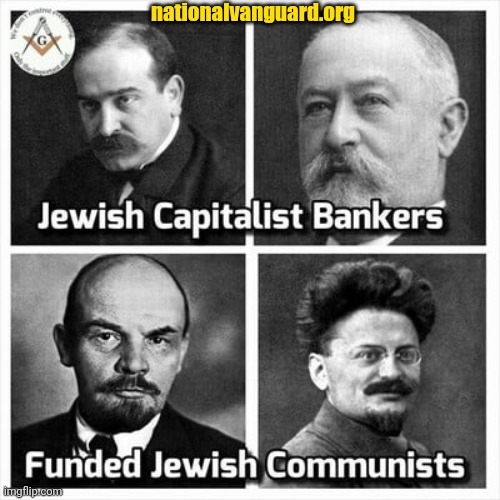
Dr. Haugen also has quotations that mention Trotsky and 24 other Jews as co-conspirators with Lenin during that treacherous coup. Most of them weren’t even Russian.
Will something akin to this be coming our way soon? HINT: Noahide Laws!
However, as I often repeat on this website: Nolite Timere! Be not afraid, my friends.
There is a remedy to these foreboding chastisements approaching us. Our only option is to follow the example of St. Kolbe and others and renew that most precious consecration to Our Loving Mother Mary. Otherwise, no Catholic will escape the Empire of Spectacle and reach the Triumph times, let alone save their souls.
When all is said and done, let us never forget the hopeful and loving message of Our Dear Mother: “In the end, my Immaculate Heart will triumph.”
Conclusion: Buy the Book & Detach from the Spectacle
So, what was the overarching purpose of this book?
Dr. Haugen summarized it well in an interview with Catholic writer Nurse Claire, stating that “it’s really the saints talking about the Jewish question.” We can tiptoe around this “inconvenient truth” (to quote the notorious Al Gore), or we can face the facts and acknowledge the ancient enmity, announced in Genesis 3:15.
Either way, we will be held accountable for understanding the cosmic conspiracy present throughout all of salvific history, intensifying in our times. Ignorance won’t suffice any longer in a world of increasingly obvious psy-ops, looming economic collapse, power outages, ICE riots, wars and rumors of wars, and the potential arrival of the Beast System. If you ignore the ancient enmity, you will lose your soul just as fast as the most delusional leftists, feminist harpies, QAnon followers, and other “blue pillers.”
The proverbial Plato’s cave will collapse its walls on you until you expire from spiritual suffocation. Nevertheless, this should be nothing new to the loyal soldiers of Jesus and Mary, who know our lives must involve combat with the forces of darkness. It is imperative that we realize those forces present themselves tangibly in our midst with a specific agenda. You, dear reader, if you are to fight for the love of Jesus and Mary, must know there is indeed an Empire of Spectacle warring against you.
How, after all, can anyone be a soldier in the Church militant if they have no enemies or refuse to realize those right in front of them? Any Catholic who disbelieves this is either a zombie or too innocent to be permitted leave from their home.
Every Catholic concerned with the crises in the world/Church should purchase this book. It costs a paltry $10 if you obtain it through Kindle. You can also explore these topics much further by following the Dr. Deep State YouTube channel, and especially by joining his Locals community (I’m glad I did). Thank you, Dr. Haugen, for showing how it is still possible to produce worthwhile scholarship in the domains of political science, theology, and philosophy.
I encourage readers, as usual, to pray the Rosary every day (all 15 decades). If you derive any value from his book (even if you dislike it overall), then offer at least a decade for Doug Haugen’s welfare and intentions.
Appendix: Glossary of Dr. Deep State terms
- Empire of Spectacle – is used to expand the ancient Roman notion of Spectacle, with what Saint Augustine called its demonic ontology, dark spiritual forces that capture participants within an earthly perception of reality. The expanded concept includes Guy Debord’s idea, taken from Society of Spectacle (1967), that modern society has been transformed into a realm of images and commodities where appearances triumph over reality. The Empire of Spectacle includes Augustine’s idea of spectacle having a demonic ontology, and the modern equivalent is the whole world being captured by images over reality, which also feeds the Great Deception.
- Cosmic Conspiracy – the war against God and man, Christ and His Church.
- Immanentizing the Eschaton – Dr. Deep State borrows this concept from philosopher Eric Voegelin for several purposes throughout his works. It often refers to the contrived efforts of millenarians who seek to hasten God’s 1,000-year reign on Earth, mentioned in St. John’s Apocalypse. Why is this problematic? It is because it rests on a false interpretation of the Apocalypse, an expectation that Jesus will “come again” just to enact 1,000 years of peace, a “Rapture,” or a golden age. This view does not comport with the teachings of the Church Fathers (who were all “a-millenarians”). If ever there was an example of “false hope” in the spiritual sense, immanentizing the eschaton with this line of thinking is among the most dangerous.
- Simulacrum – a false harmony that masks contradiction. In the bible, we see an example of this with Psalm 134:15, which uses the Latin “simulacra” to describe the idols of the gentiles (silver and gold). All idols produce imitation joy, diverting our gaze away from eternal logos.
- Egregore – a demonic reality, mind prison of collective thought-forms, or psychic entities generated by mass mind-states that generate spiritual narcissism. Synonyms for this include “group mind,” mimetic force, or even zeitgeist. In Jewish Kabbalah, we should notice their pursuit of an “earthly Jerusalem,” which contradicts the Catholic notion of the “heavenly Jerusalem.” Dr. Deep State also sometimes refers to the related term, “mind virus,” in a similar fashion.
- The Metaverse – an artificial simulation of reality; the merger of humans and cyborgs. Opponents of the Catholic religion seek to institute this as their final implementation of the grand Spectacle through an entirely false, artificial reality, divorced from any and all pursuit of the Beatific Vision.
- Demonic Ontology – St. Augustine’s term for the early Roman spectacles he critiqued in his book, City of God. A demonic ontology is the opposite of how we should understand God’s nature as the great “I am.” Today, the most pervasive demonic ontology is the fabricated idea, espoused by our enemies, that considers Him a “god of becoming” rather than a God That Is. Then, there are many, like Pierre Teilhard de Chardin, who would have us believe we can slowly attain to godhood through synthesizing with every other organism, whereas others believe we can remedy God’s “mistakes” (fixing the world), or even bring Him down to our level. This term derives its meaning directly from the next important concept . . .
- The GREAT DECEPTION – This refers to 2 Thessalonians 2:10 where the Apostle warns us we will perish if we do not love the Truth. As Bishop Challoner notes in his Douay-Rheims commentary, “God shall suffer them to be deceived by lying wonders,” which aptly describes the ominous threat of the Empire of Spectacle.

 Catholics Aren't Zombies!
1 Comment